3D Planet Hub
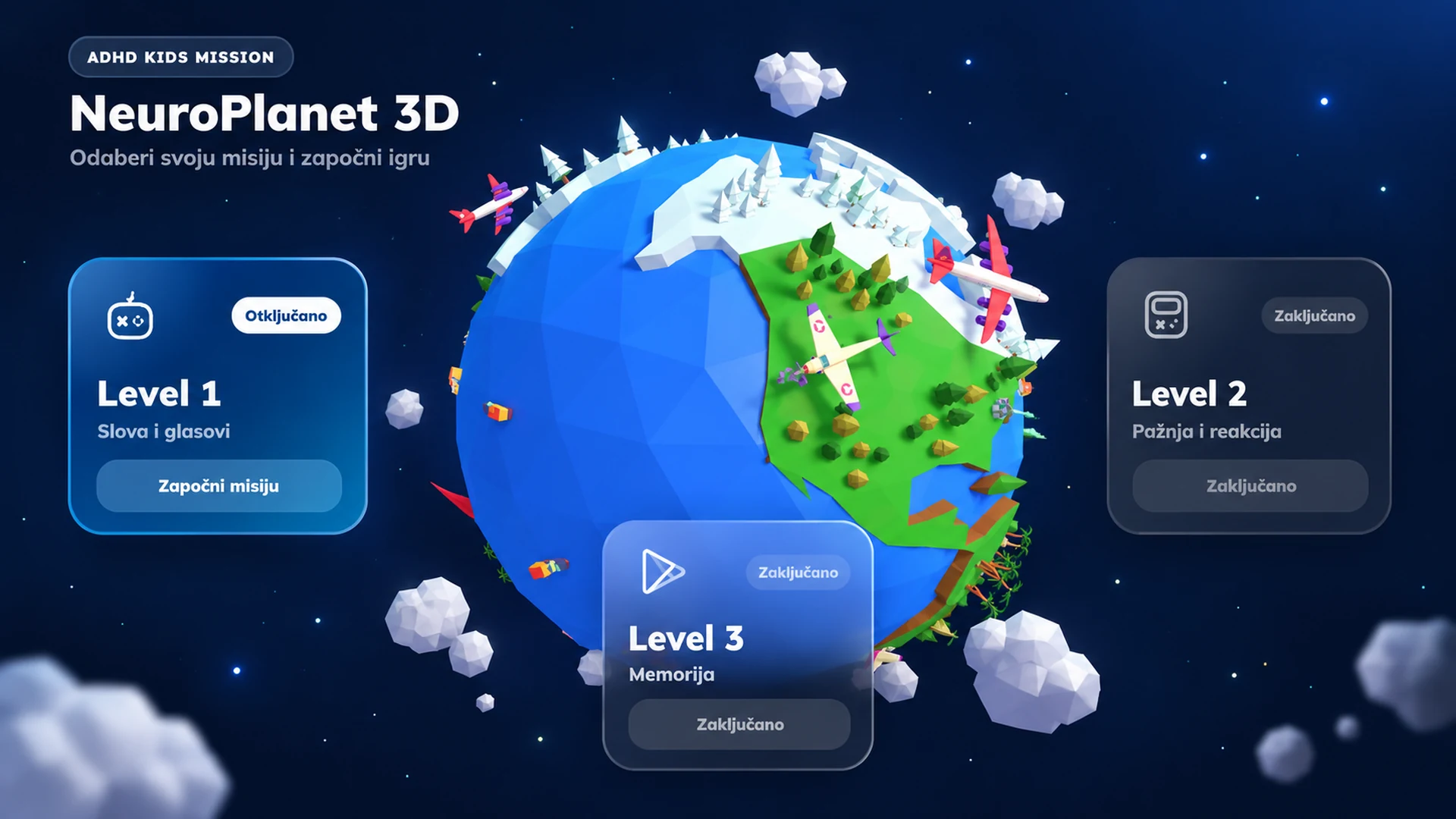
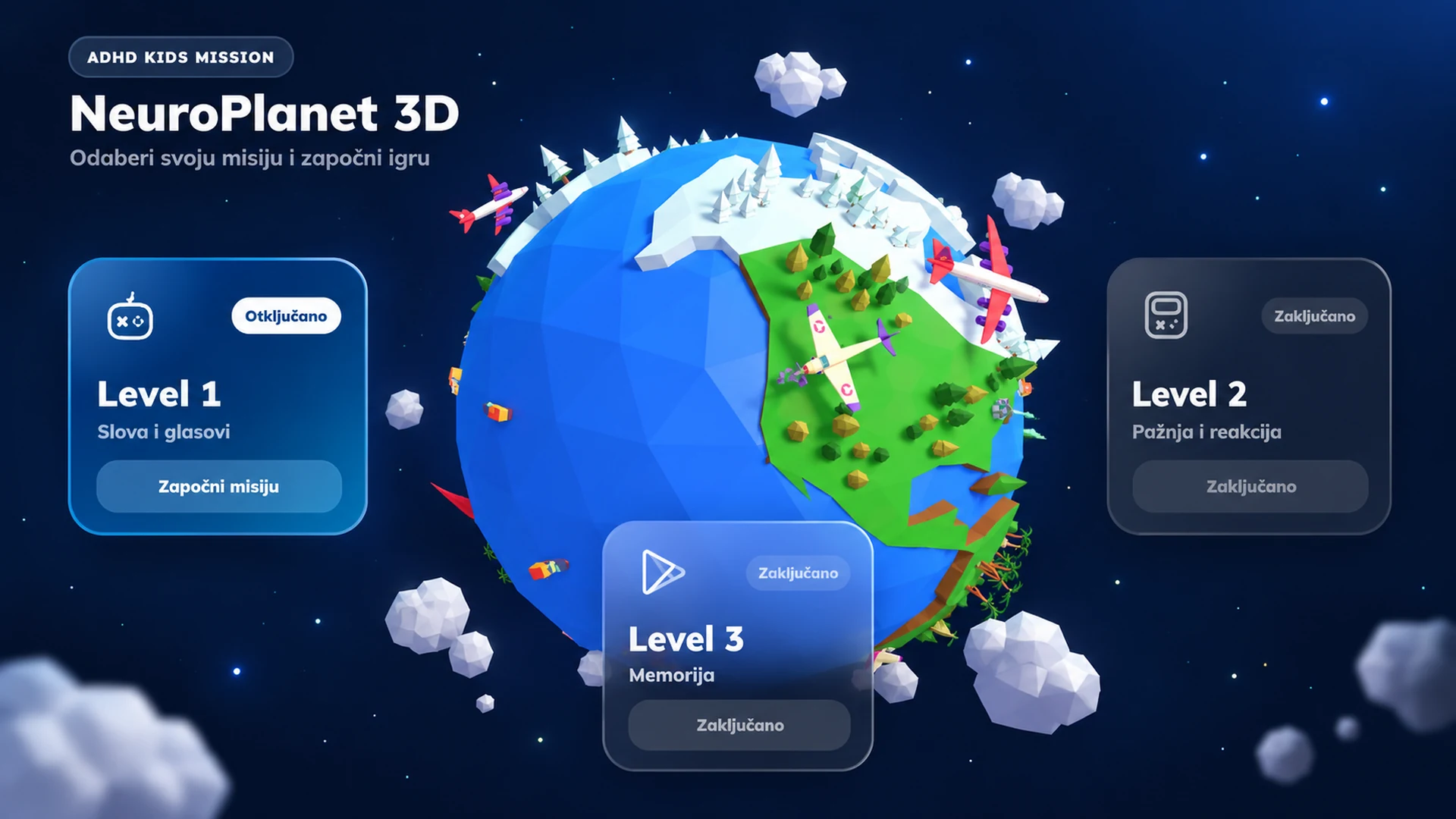
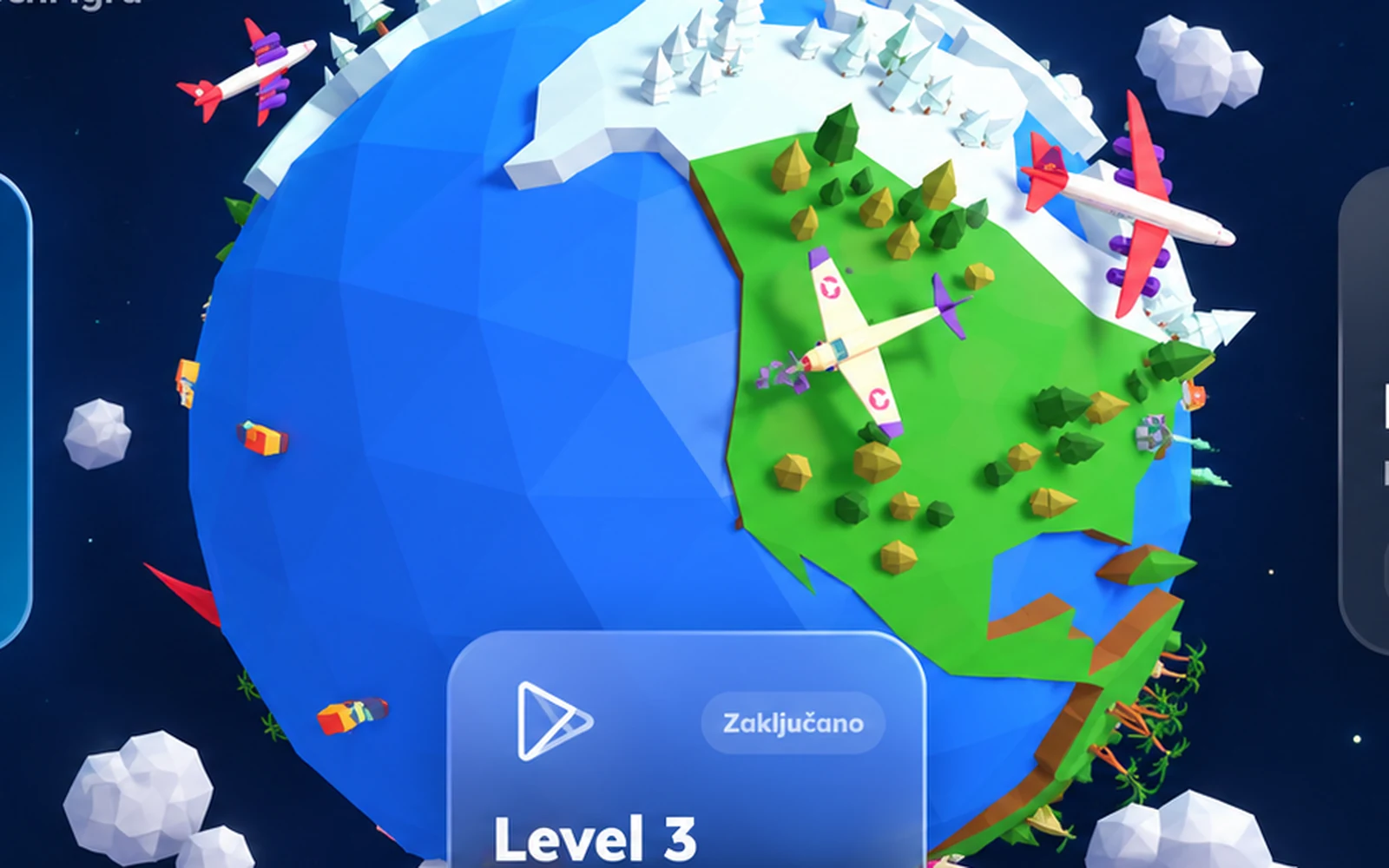
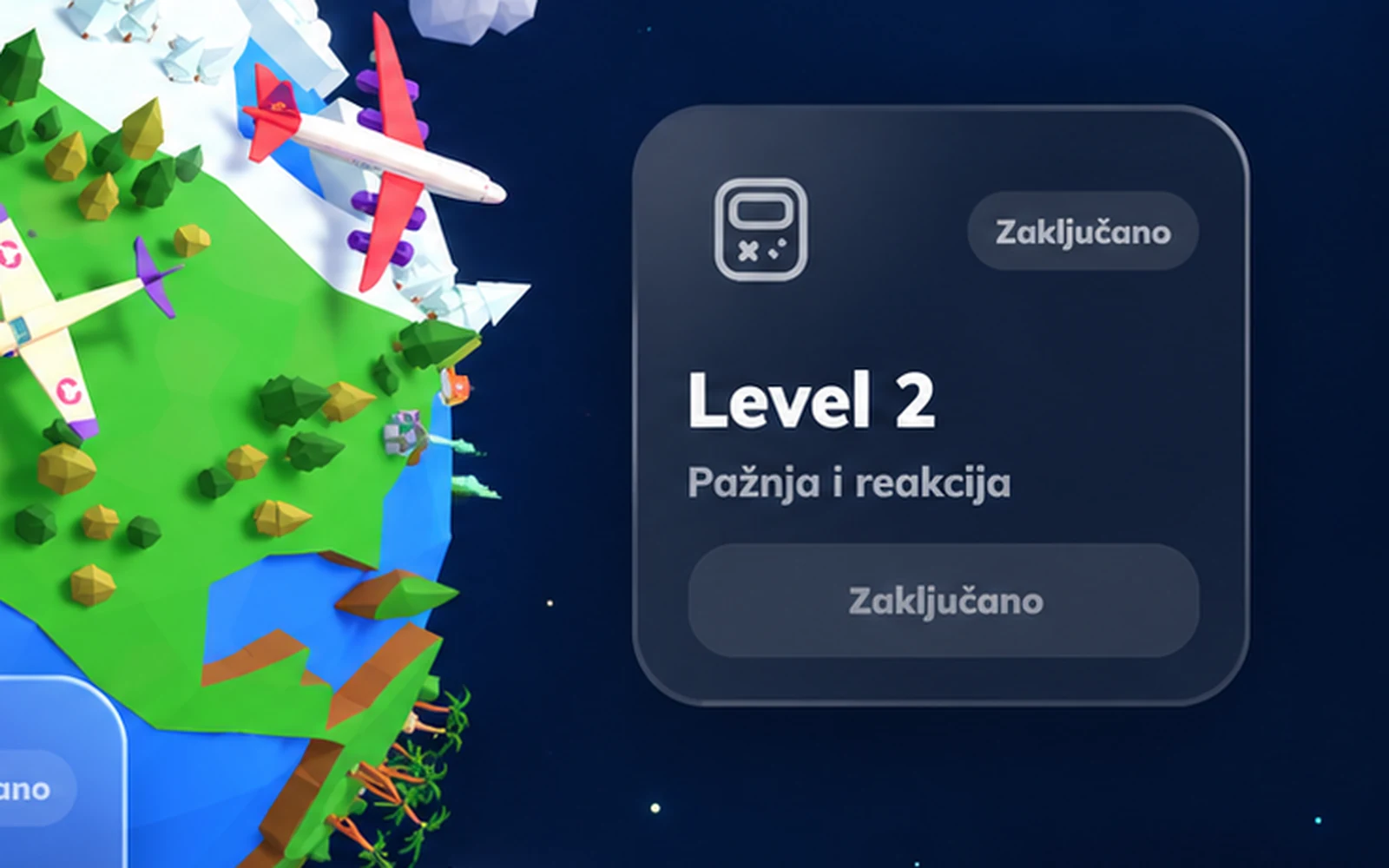
A low-poly Three.js world acts as the central mission hub, turning level selection into a playful spatial experience instead of a traditional menu.
3D Educational Experience
An interactive 3D educational prototype designed to support children with ADHD through short cognitive exercises, clear progression, immediate feedback and a playful planet-based interface.
Student project and experimental educational prototype • Open-source development
Overview
NeuroPlanet 3D combines an interactive Three.js planet with progressive educational levels focused on letters and sounds, word construction and memory. The experience is structured around ADHD-friendly design principles such as reduced interface clutter, large interactive targets, short tasks, guided pacing and immediate visual or audio feedback.
Features
A low-poly Three.js world acts as the central mission hub, turning level selection into a playful spatial experience instead of a traditional menu.
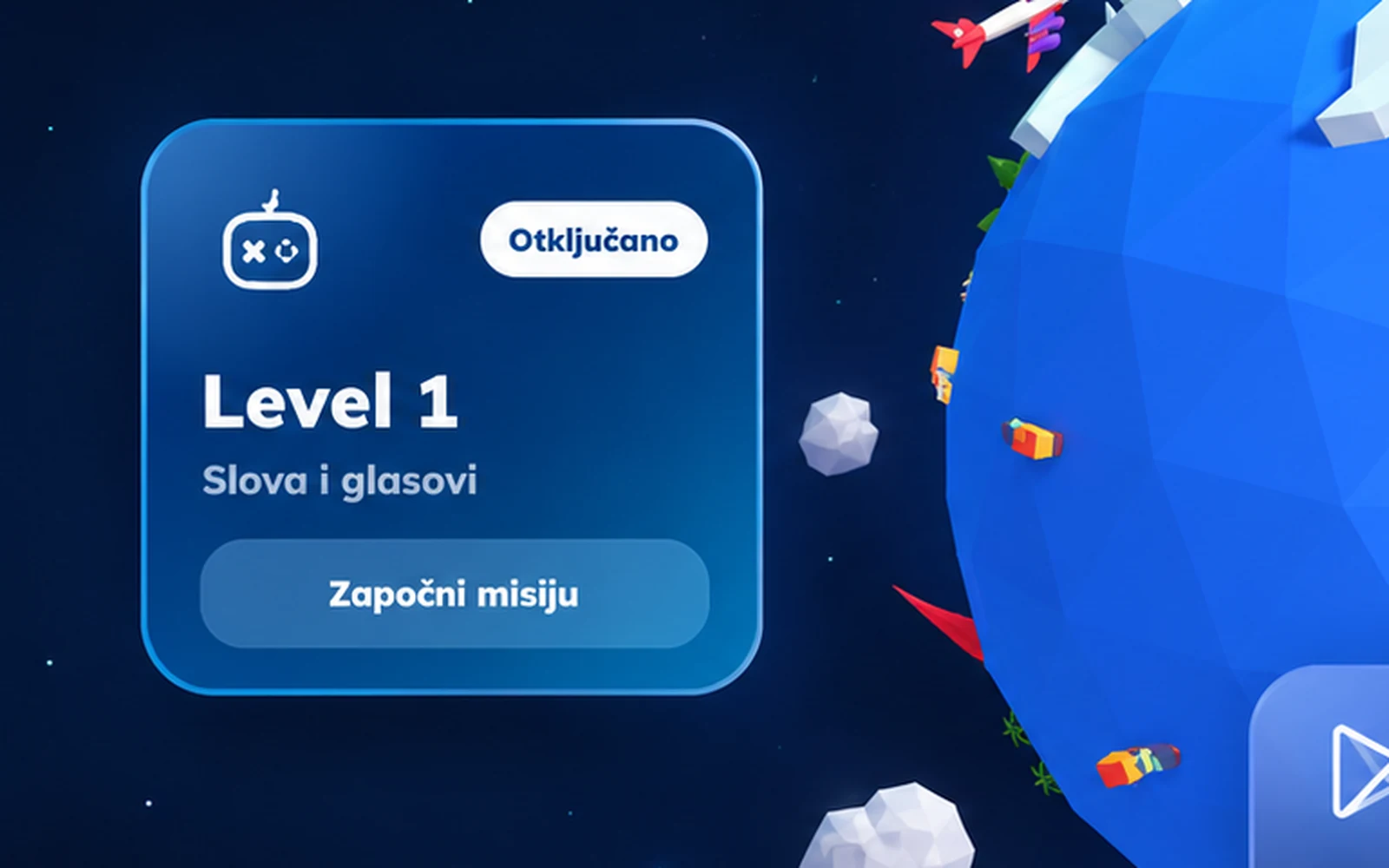
Missions unlock through progression, giving children a clear next objective while keeping the visible experience focused on one step at a time.
Speech synthesis, sound effects and immediate feedback support letter recognition, interaction cues and positive reinforcement during exercises.
Scores, wrong attempts, completion time, selected difficulty and overall progress are tracked locally for review through the results dashboard.
Experience Flow
The interactive Three.js scene introduces the available missions and communicates which levels are unlocked or still part of the progression path.
Each level focuses on a specific activity such as letters and sounds, word construction or memory matching with its own pacing and interaction model.
Scores, mistake tracking, hints, timing and audiovisual responses provide immediate feedback without overloading the child with secondary interface elements.
Level results and total statistics are saved through localStorage and presented in a dedicated analytics view for later review.
Interface
Technology
FAQ
NeuroPlanet 3D is an experimental educational prototype that combines a playful 3D world with cognitive mini games designed around ADHD-friendly interaction principles.
Level 1 focuses on letters and sounds, Level 2 on combining syllables and constructing words, and Level 3 on memory-card matching with adjustable difficulty and hints.
The project emphasizes minimal clutter, large interactive elements, short tasks, immediate feedback, guided pacing, smooth animation and reduced cognitive overload.
The application records level scores, wrong attempts, completion time, selected difficulty and total progress. Those results are stored locally and can be reviewed in the analytics dashboard.
The dashboard is designed as a review surface for teachers, speech therapists and parents, showing level scores, accuracy, completion time, difficulty and overall progress.
The 3D world turns progression into a playful visual journey. It provides context and motivation while still keeping the actual level interactions focused and relatively simple.
The project demonstrates browser-based 3D rendering, multi-page Vite architecture, game-state and progression logic, audio APIs, speech synthesis, local persistence, analytics tracking and responsive educational interface design.
Student Project
NeuroPlanet 3D was developed as a student project exploring how interactive 3D environments, educational game mechanics and ADHD-friendly UX principles can support attention, engagement, cognitive stimulation and motivation.
Built the planet-based mission hub with Three.js, GLTF loading and interactive camera controls as the visual foundation of the learning experience.
Implemented progression, scoring, mistakes, difficulty, hints and level-specific logic across multiple educational mini games.
Combined speech synthesis, sound effects, visual effects and victory animations to keep feedback immediate and understandable.
Structured local progress tracking so scores, timing, accuracy and difficulty can be reviewed without requiring a backend or user account.