Live Transcription
Starts the appropriate platform speech-recognition session and turns partial and final recognition results into readable text with a responsive transcription experience.
Real-Time Speech Accessibility
An accessibility-first speech-to-text application that turns live conversations into clear, readable text in real time through a fast, focused and cross-device experience.
Independent accessibility project • Open-source development
Overview
Clarity is designed to make spoken communication easier to follow by turning live speech into readable text through the speech-recognition services available on each supported platform. Its focused interface keeps transcription, language controls, local history and accessibility features close at hand for conversations, meetings, lectures and everyday communication.
Features
Starts the appropriate platform speech-recognition session and turns partial and final recognition results into readable text with a responsive transcription experience.
Croatian and English voice modes keep recognition and interface behavior aligned with the language being used in the conversation.
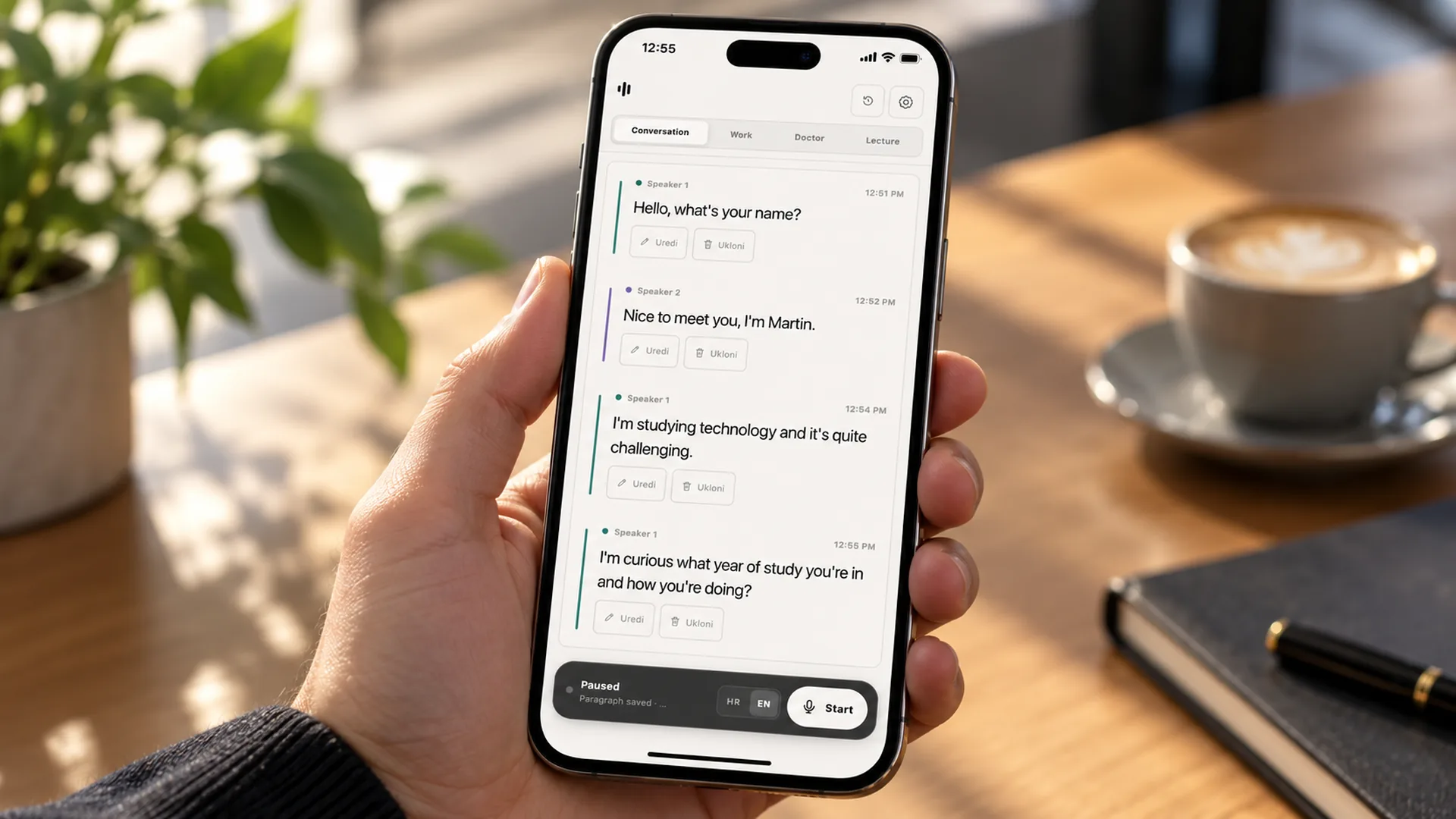
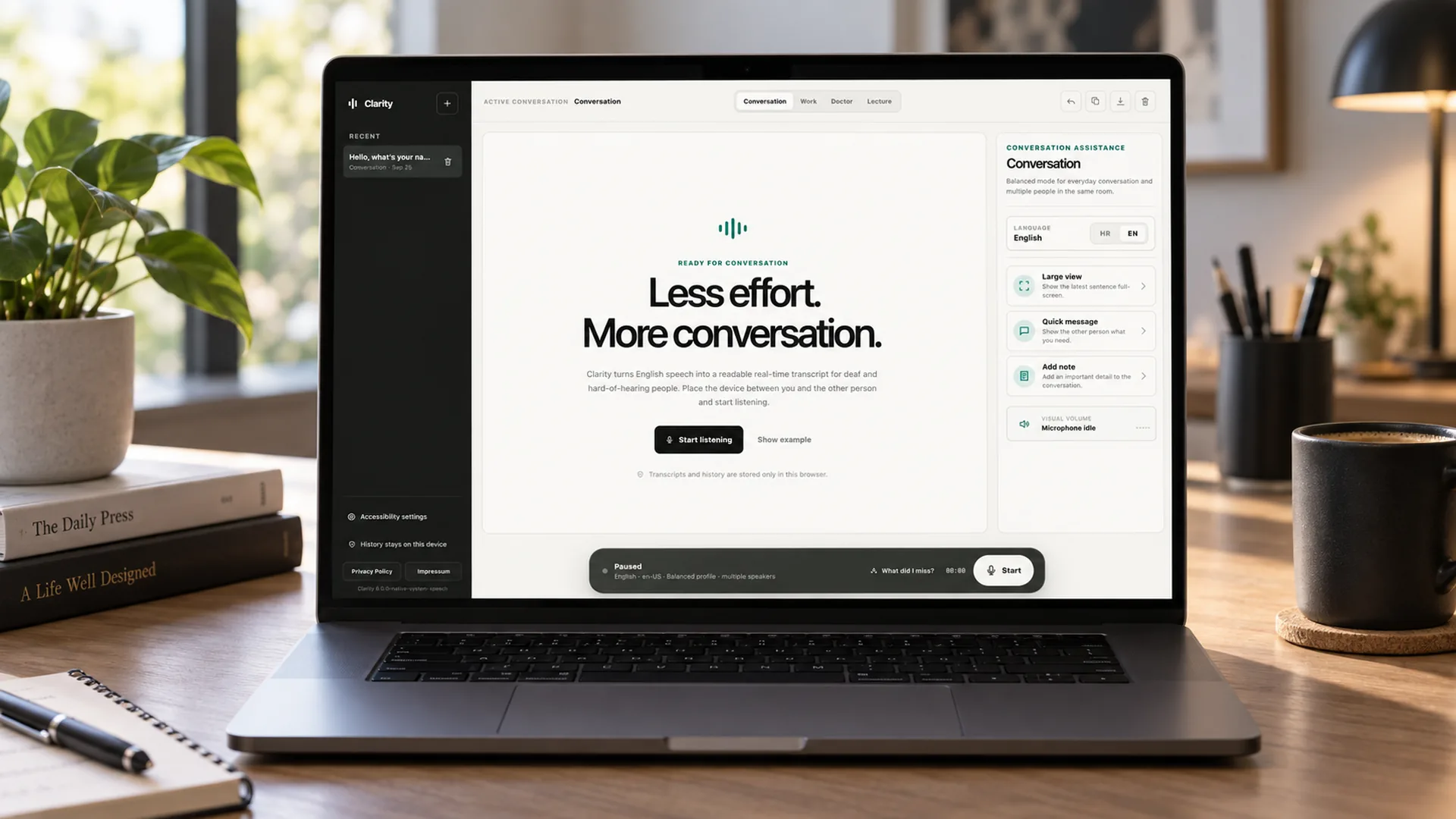
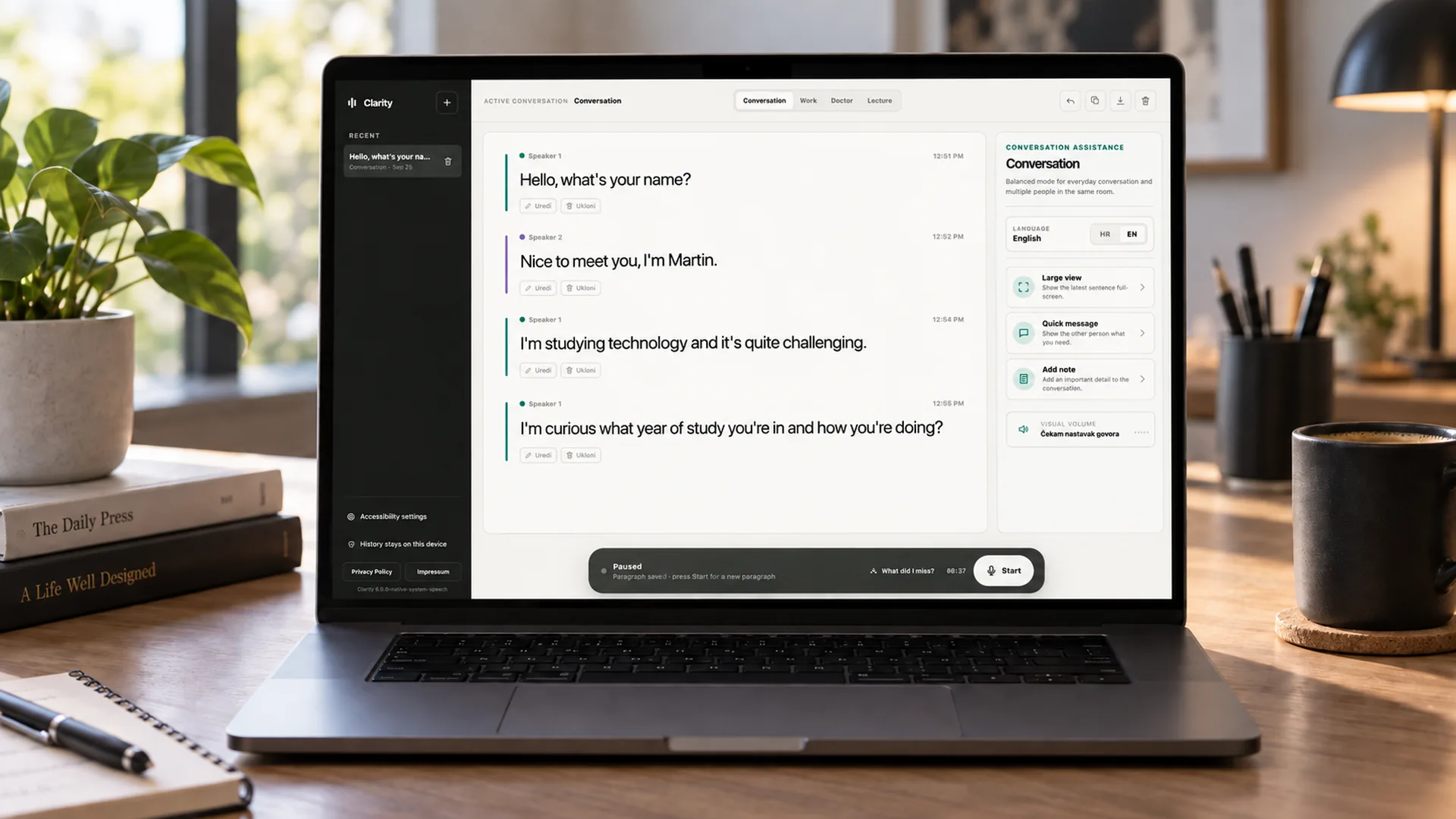
Large readable transcripts, focused controls and low-friction interactions keep the application useful in communication-heavy situations.
Transcript history and application preferences stay close to the user, supporting a practical workflow without turning the interface into a complex dashboard.
Experience Flow
Clarity starts a focused speech-recognition session for the active platform and device.
Native builds use the ClaritySpeech bridge to communicate with the operating system's speech-recognition service, while compatible browsers use the Web Speech API as a fallback.
Platform speech services produce partial and final recognition results, which Clarity normalizes into a consistent event flow across supported environments.
The interface turns recognition events into a clear readable conversation that can be followed in real time.
Interface
Technology
FAQ
Clarity turns live spoken communication into readable text with as little friction as possible. The goal is not simply transcription accuracy, but a complete experience that is fast to start, easy to follow and comfortable to use during real conversations.
The interface is accessibility-first, but it is not limited to one audience. It can support deaf and hard-of-hearing users, families, students, meetings, lectures and any situation where readable speech can make communication easier to follow.
Native builds start the operating system's speech recognizer through the ClaritySpeech bridge, while compatible browsers use the Web Speech API fallback. Clarity normalizes partial and final recognition events and feeds them into the transcript layer so the conversation remains readable while recognition continues.
Conversation is time-sensitive. A transcript that arrives too late or constantly rewrites itself becomes difficult to follow, so Clarity prioritizes low-friction session handling, readable partial results and predictable updates.
Voice language selection lets the recognition flow follow the language being spoken, while the surrounding interface can present the corresponding Croatian or English user experience instead of mixing recognition and UI language choices.
Clarity keeps application history and preferences locally where possible, allowing the experience to remain personal and practical without requiring a complex account-driven workflow for everyday use.
Communication happens across phones and computers. Clarity is structured around a consistent application experience so the same core workflow can be used on different form factors rather than being tied to one desktop-only environment.
Readability, predictable controls, responsive layouts and reduced interaction overhead are treated as core engineering requirements. The transcript is the primary content, so visual complexity is kept secondary to communication.
Clarity demonstrates cross-platform speech-recognition integration, native bridge design, event and session management, responsive interface engineering, local application state and an accessibility-focused product architecture.
Independent Development
Clarity is an independently developed accessibility project focused on making spoken communication easier to follow through a fast, readable and maintainable transcription experience.
Designed the application flow around continuous microphone input, recognition sessions and readable transcript updates instead of a traditional upload-and-process workflow.
Structured partial and final recognition events so starting, stopping and restarting a session remains predictable without fragmenting the visible conversation.
Built the interface to remain usable across desktop and mobile layouts with the primary transcription controls kept accessible on smaller screens.
Treated readability and communication speed as product requirements, keeping the transcript prominent and reducing unnecessary visual or interaction overhead.